
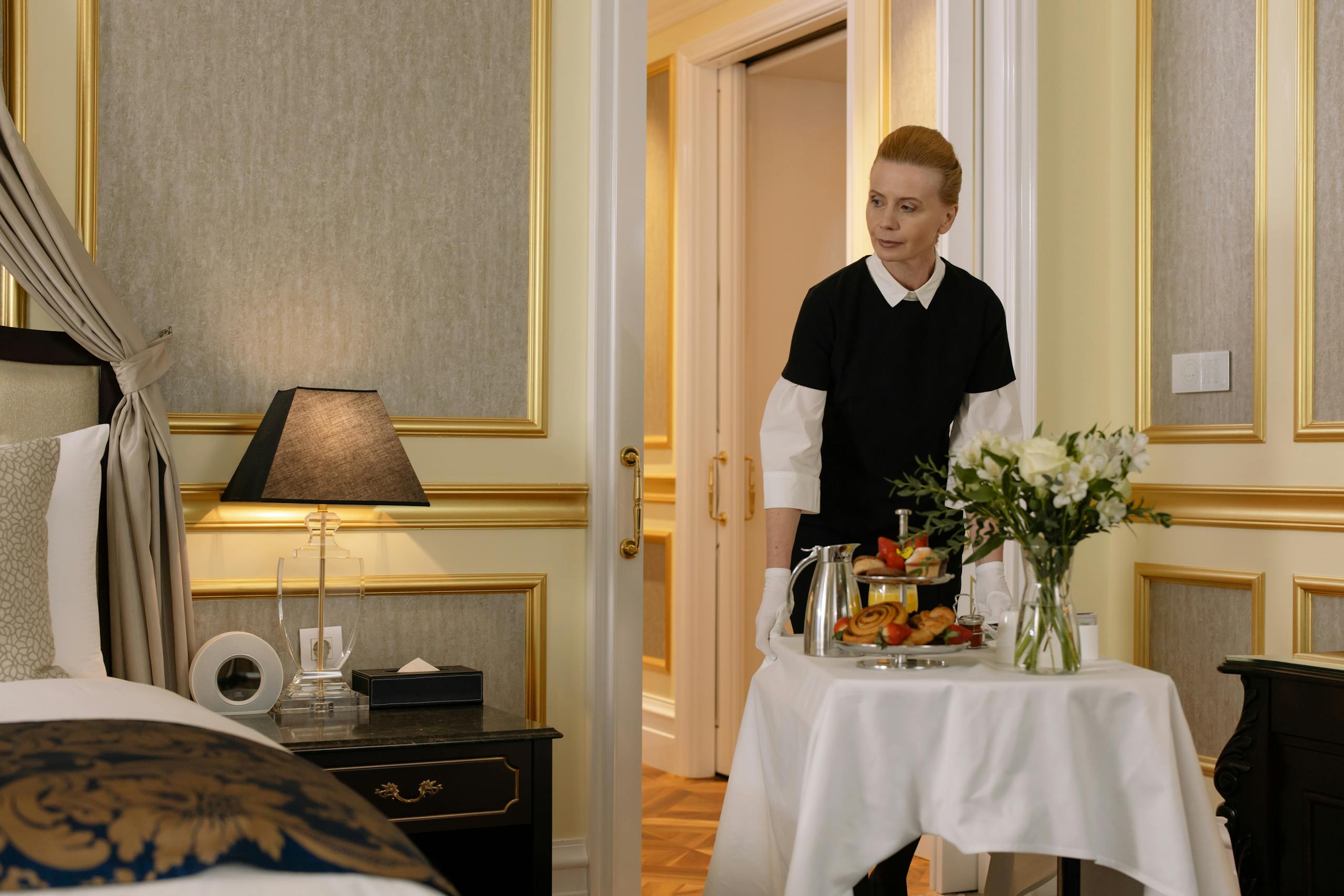
The Ritz-Carlton’s service credo has been one of the most studied documents in luxury hospitality for decades. Its central promise, that guests will receive genuine care and comfort, and that their unexpressed wishes and needs will be anticipated, isn’t remarkable because it sounds good on paper. It’s remarkable because the brand has built an entire operational culture around making it demonstrably true, every day, at properties around the world. For hospitality students and professionals exploring career pathways in luxury hotels, understanding how that culture is built and sustained offers one of the clearest available models of service excellence in practice.
The philosophy behind the Credo
At its core, the Ritz-Carlton Credo is built on a specific understanding of what luxury service actually means. It positions every employee, referred to as a “Lady or Gentleman” (that sounds cool ain’t it?), not as a service provider but as a professional responsible for the total guest experience. That framing matters more than it might initially seem.
When a housekeeper, a front desk agent, and a sous chef all understand themselves as active participants in a shared guest experience rather than as occupants of separate job functions, the entire service culture changes. Decisions get made differently, problems get resolved more proactively, and guests feel the difference even when they can’t articulate exactly what’s causing it.
The Ritz-Carlton reinforces this philosophy through daily lineup meetings: short briefings held across every property, in every department, every day. Each meeting includes a reading and discussion of one of the brand’s twelve service values. Over time, this repetition doesn’t just communicate values. It builds them into a professional instinct.
Anticipatory service: what it looks like in practice
The concept of anticipatory service, identifying and addressing a guest’s needs before they’re expressed, is perhaps the most defining characteristic of the Ritz-Carlton approach. It’s also the hardest to teach, because it requires genuine attentiveness rather than procedural adherence.
WOW stories are how the brand captures and transmits this skill across its global team. These are real guest service moments (documented, shared internally, and celebrated) that demonstrate the values in action rather than in theory. The stories circulate through the organization, becoming a living library of what the credo looks like when it works. They also serve a practical function: they give new employees concrete models of decision-making to draw from when they encounter situations no training manual can fully anticipate.
One well-documented example involves a Ritz-Carlton employee in Florida who, upon learning a guest was traveling with a young child attached to a specific stuffed animal that had been accidentally left behind, arranged for the toy to be shipped overnight, and prepared a small photo album showing the stuffed animal “enjoying its extended stay” at the hotel before its return. The guest hadn’t asked for this, nobody had briefed the employee to do it: they simply understood what the moment called for, and had the autonomy and conviction to act on that understanding.
That’s not a customer service script, but rather pure service culture.
Why storytelling remains essential in luxury hospitality
The WOW story framework works because stories communicate what rules and standards cannot. A policy tells an employee what to do. A story shows them why it matters, how it feels from the guest’s perspective, and what professional judgment looks like when applied in real conditions.
For hospitality educators, this is a meaningful insight. Training that includes real service narratives, alongside operational procedure, produces professionals with both the technical skills and the contextual judgment that luxury properties actually need. The Ritz-Carlton has understood this for decades. It’s why their culture replicates consistently across properties in very different cities and countries, serving very different guest profiles.
The brand’s approach also reflects something worth noting for any hospitality student: service excellence at the highest level is about caring enough to notice what the moment requires and having the professional confidence to respond to it. That combination of observation, empathy, and conviction is what the best hospitality education works to develop.
Hospitality Academy’s programs and partner properties are selected specifically for their ability to provide this kind of formation: environments where students learn not just how to serve, but how to care. That distinction is exactly what separates a good hospitality professional from an exceptional one.